
Trust the feeling over the shape
The Board on which i serve is currently recruiting Directors. Six weeks ago, I took up yoga. I promise these connect.
Board recruitment has a process. Assess current capabilities, define future requirements, document as a skills matrix and seek Directors that fill in the gaps. Highly rational.
We often overlay with a ‘culture fit’ – will they create a Board that balances convergent and divergent thinking and behaviours? do the values (in abstract and in practice) represent the communities we serve? This is another framing, creating some rationality from something that can’t really be empirically assessed.
I spent most of my thirties training two forms of kung fu, Tai Chi and Shaolin. Life took me away from an excellent teacher; when I couldn’t find a good teacher, practice lapsed. But my body needs something, for strength and flexibility, so six weeks ago I started yoga.
Kung fu has forms. A specified sequence of movements that are learnt and repeated. Over time, they begin to feel right. Trust the teacher, trust the process. Copy the movement exactly. The construct is ‘teacher and student’; the goal is mastery of the form.
Yoga is the opposite. There is a shape to aim for, but there isn’t really a ‘correct’ – you do not get it right by copying a teacher (my hips do not bend like that!). Instead, you feel your way into it. The construct is ‘guide and follower’; the goal is to develop interoception and flow to what feels good.
The language is completely different.
The correct position is to have your back foot at 45 degrees versus This position carries an invitation to sit lower
Your spine should be straight versus We try lift higher as we breathe in
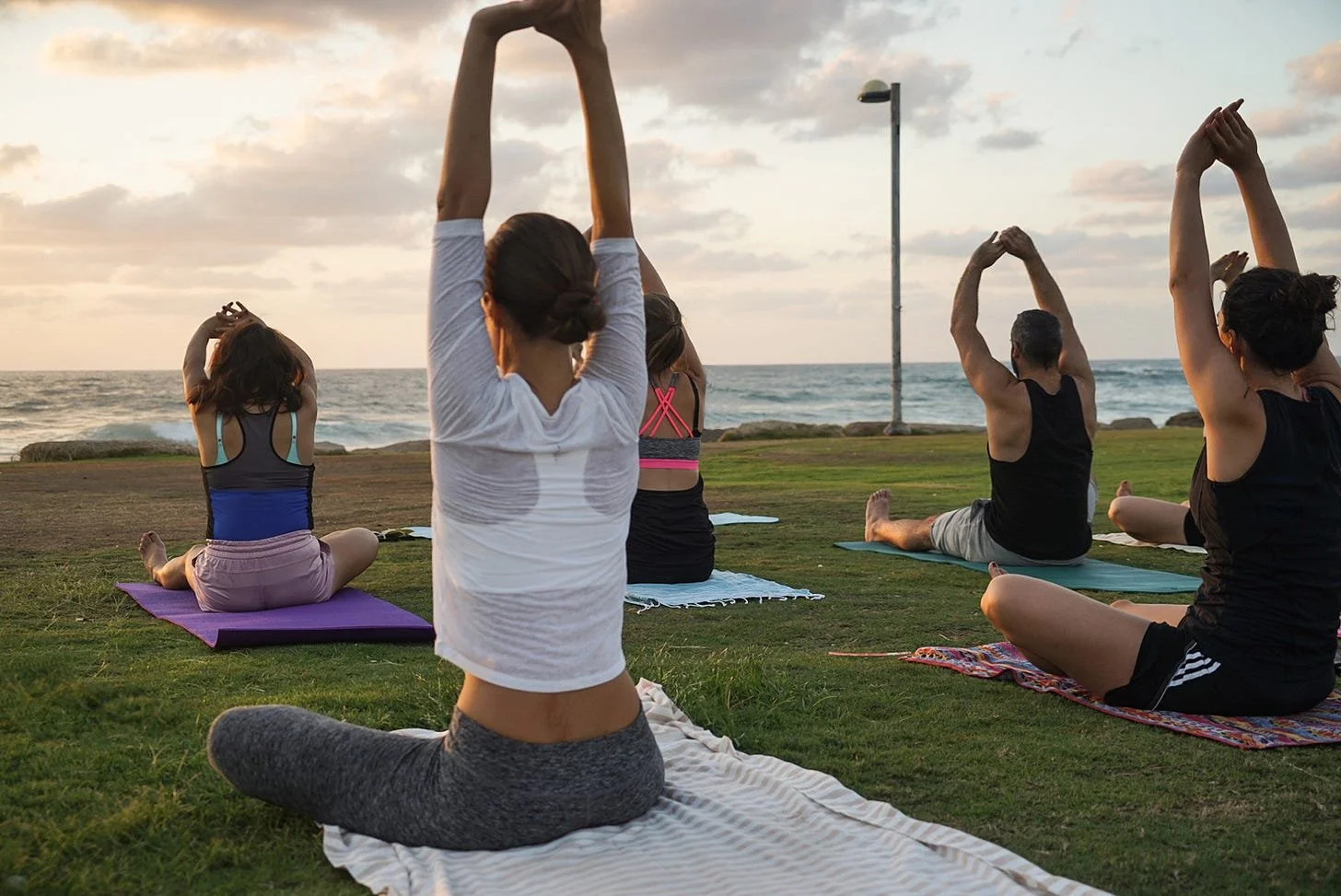
Notice the poses are all held slightly differently... Photo: WeTravel, CC BY 2.0
Kung fu demands your body fits the template, while yoga invites you to make the shape your own. Kung fu demands the group move the same way, but yoga suggest you find your own setting within the movement. (And who wouldn’t want to find their own ‘comfortable baby’ pose?)
Back to Board recruitment. The dominant mode for a Board is Kung fu. The rationality of the AICD, the structure and workflow of committees and annual plans, the ordering of papers and agendas, audit and risk assessments. These are all important, but we don’t talk enough about the yoga.
Directors also feel their way into the organisation and its path forward. The Board is a social group in which conformity to the forms is generally encouraged – sometimes enforced – but should sometimes be resisted. Sometimes we must listen for more than evidence and process can tell us.
The moments of Board practice I regret are when I felt something was wrong but didn’t speak up. This happened because I couldn’t fit the feelings into the shape of the form. I couldn’t template up my concerns, and justify them with respect to the correct method, and so I distrusted what my feeling were telling me. I’ve now learnt to pay attention to that feeling, and to be willing to stand against the usual forms on the rare occasion it’s required: I know this is an odd thing to say, and outside the process we agreed, but I am considering [XXX] and it doesn’t feel right to me.
Working with Boards, I am using the yoga language to support discussion. Because they are so accustomed to structure, breaking free of it – just for an hour – can be liberating. With permission to feel their way through something, rather than direction to move themselves defensibly from step to step, something else may emerge.
This might be using the instructor’s language explicitly: “an invitation to consider…” rather than “next on the agenda…” Or it might be to say aloud that we might extend our stretch as far as feels possible.
Now, I might go further and ask a group to ignore logical stepwise thinking and ask them to jump straight to an answer:
Never mind the paper. What feels right to you?
If you could order your options from constricting to freeing, what would you prioritise?
Imagine yourself in three years’ time, feeling extremely comfortable with your trajectory. What movements in 2026 created that?
Six weeks of yoga hasn’t taught me the poses. It’s teaching me to trust the feeling over the shape. I’m pushing that into my professional practice and asking that question of the room as often as I ask it of my own body.
In the recruitment conversation, this will look like inviting a leap of faith; imagine XXX joins our Board, what might that feel like? The skills matrix will only get us so far; we will need to sit into the feeling and ask ourselves where we can feel the heat and the stretch. Never mind justifying the decision to a regulatory investigator: deep in our flesh, what do we imagine this would mean for our future?
First published in Strategy, Applied.
