
Talking to tape on a stick
I was lucky: my kids’ teenage years fell in the golden age of Marvel films. Up to Avengers: Endgame in 2019, every film was a family event. They’re now mocking the trailer for the franchise’s next big film, and it isn’t just that they’ve aged out.
It’s stale: there’s no tension, no frisson. It couldn’t look more formulaic. Why?
The obvious critiques are that it’s mostly digital (even the costumes) and the script is designed to sequence Instagrammable moments. But there’s something else: the expensive ensemble cast aren’t acting with each other. Alan Cumming said he did the entire film in isolation, with characters given fake names so he didn’t know who he would end up on screen with. Actors talk to a piece of tape on a stick, in a green box.
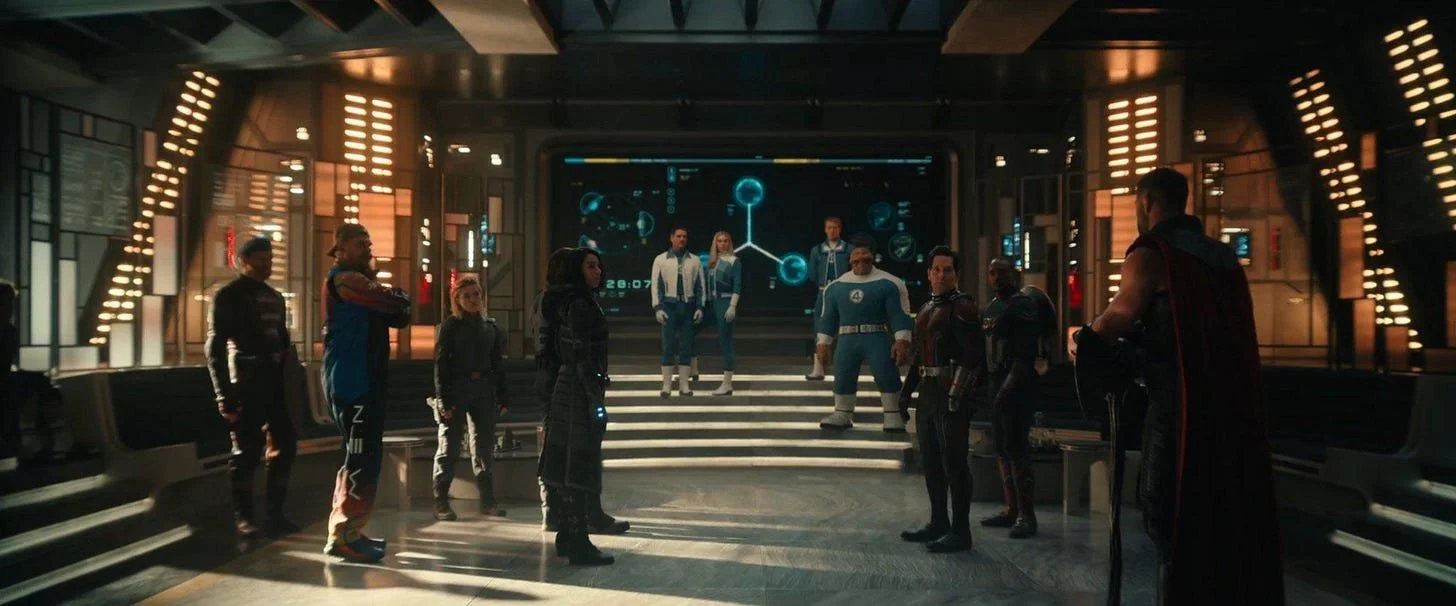
Watching, we sense that these humans are not interacting. We miss emotional connections. It just feels wrong.
I’ve seen strategy processes that replicate this green screen approach. Department-by-department workshops, an executive centrepiece, a specialist giving commentary, a staff survey. Every leader plays to a camera in a green box, then the bits are assembled for approval.
The result is shaped like a strategy and sounds like a strategy. Nothing in the document is technically wrong. But it is plausible fragments edited together, with establishing shots of a team awayday. If the document is going to hold an audience, it needs to feel made, not assembled.
If you’ve experienced strategy built by green screen, it might feel like:
There were never any constructive disagreements, leading to uneasy compromises in the end product
You could have written the final document before the process began
There was never a moment when the group felt a collective aha!
Worst of all, no-one really feels proud of it; put on the shelf next to the audit statements, it’s not taken down until next year’s strategy progress review.
True groupwork is responsive, brought alive by eye contact and interpersonal context. We share our purpose and our identity. I hear your challenges. I see you committing to act on mine. We agree your initiative needs to happen first. We find ways to intertwine our story with hers, and with his. It’s our collective work, and the document is simply a static camera’s capture of it.
Was your last strategy co-scripted in the room, or cobbled together in post-production?
First published in Strategy, Applied.
